


hunts for skeletons: undisclosed debts, pending lawsuits, or a culture that might clash with their own.
must "pre-flight" their business, cleaning up financial statements and ensuring all contracts are in order to maximize the valuation. The Valuation Gap buying and selling companies
While the spreadsheets focus on EBITDA and synergies, the success of a deal usually hinges on people. When a company is sold, employees face uncertainty. If the best talent leaves during the transition, the buyer is left with an expensive, empty shell. Successful acquisitions prioritize cultural integration as much as financial integration. Conclusion hunts for skeletons: undisclosed debts, pending lawsuits, or
On the , the motivation varies by the stage of the business. For founders, it’s the "exit"—the moment they turn years of sweat equity into liquid wealth. For larger corporations, selling a division (divestiture) is often a way to shed "non-core" assets, allowing them to focus on their primary mission while generating a cash influx. The Critical Phase: Due Diligence When a company is sold, employees face uncertainty
The acquisition and divestiture of companies—often referred to as Mergers and Acquisitions (M&A)—is the ultimate high-stakes chess game of the business world. Whether it’s a startup being absorbed by a tech giant or a private equity firm flipping a manufacturing plant, the process is less about a simple transaction and more about the strategic realignment of resources. The Motivation: Why Move the Pieces?
The most vital part of buying or selling isn't the handshake; it’s the "due diligence." This is the corporate equivalent of an inspection and a background check rolled into one.
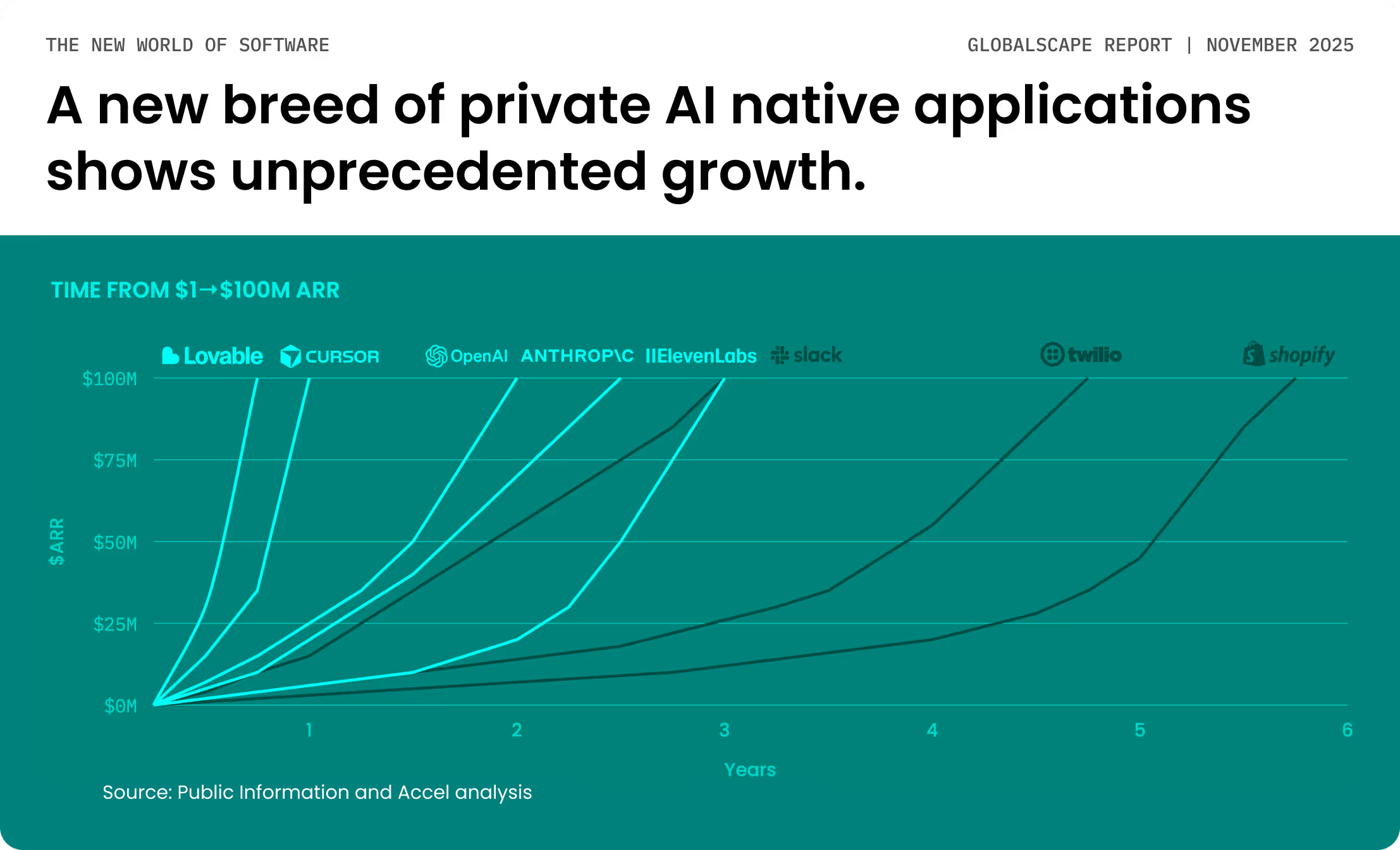
We are witnessing a tectonic shift, with AI accelerating innovation across the globe and unprecedented growth in AI native applications and enterprise agentic workflows. This shift will require an estimated $4 trillion investment in computing data centers over the next five years.

Report
Report
Report
Report
Report
Report
Report
Report