
Speed
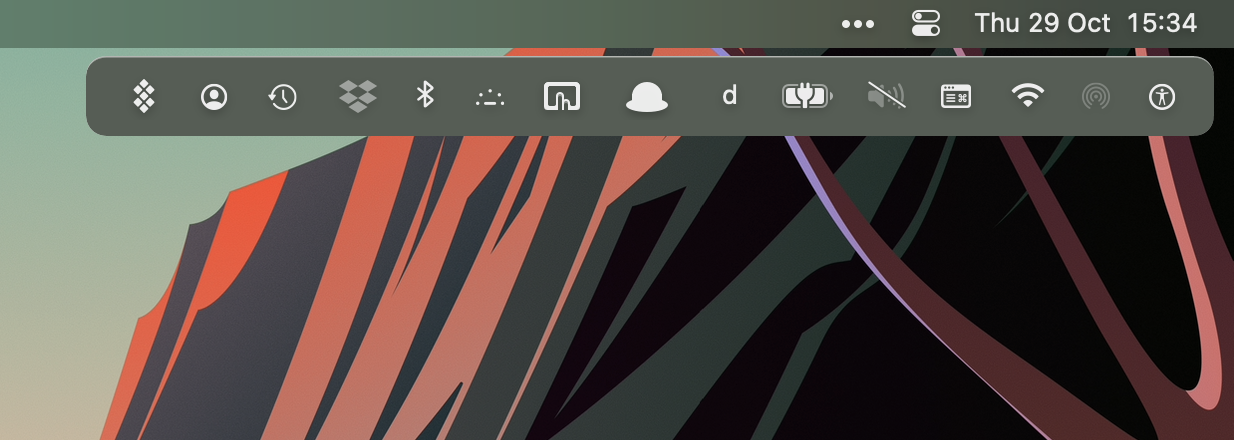
Lightning-fast access to your menu bar items is now even better. Get instant access to your hidden menu bar items simply by swiping or scrolling in the menu bar, clicking on the menu bar, or if you prefer, simply hovering.
Bartender is an award-winning app for macOS that for more than 10 years has superpowered your menu bar, giving you total control over your menu bar items, what's displayed, and when, with menu bar items only showing when you need them.
Bartender improves your workflow with quick reveal, search, custom hotkeys and triggers, and lots more.
Lightning-fast access to your menu bar items is now even better. Get instant access to your hidden menu bar items simply by swiping or scrolling in the menu bar, clicking on the menu bar, or if you prefer, simply hovering.

Access the menu bar items otherwise hidden by the notch on MacBook Air and Pro screens. Bartender will automatically hide your currently shown menu bar items when needed to create room to show the items hidden by the MacBook Air and Pro screens notch, giving you access to all your menu bar items.
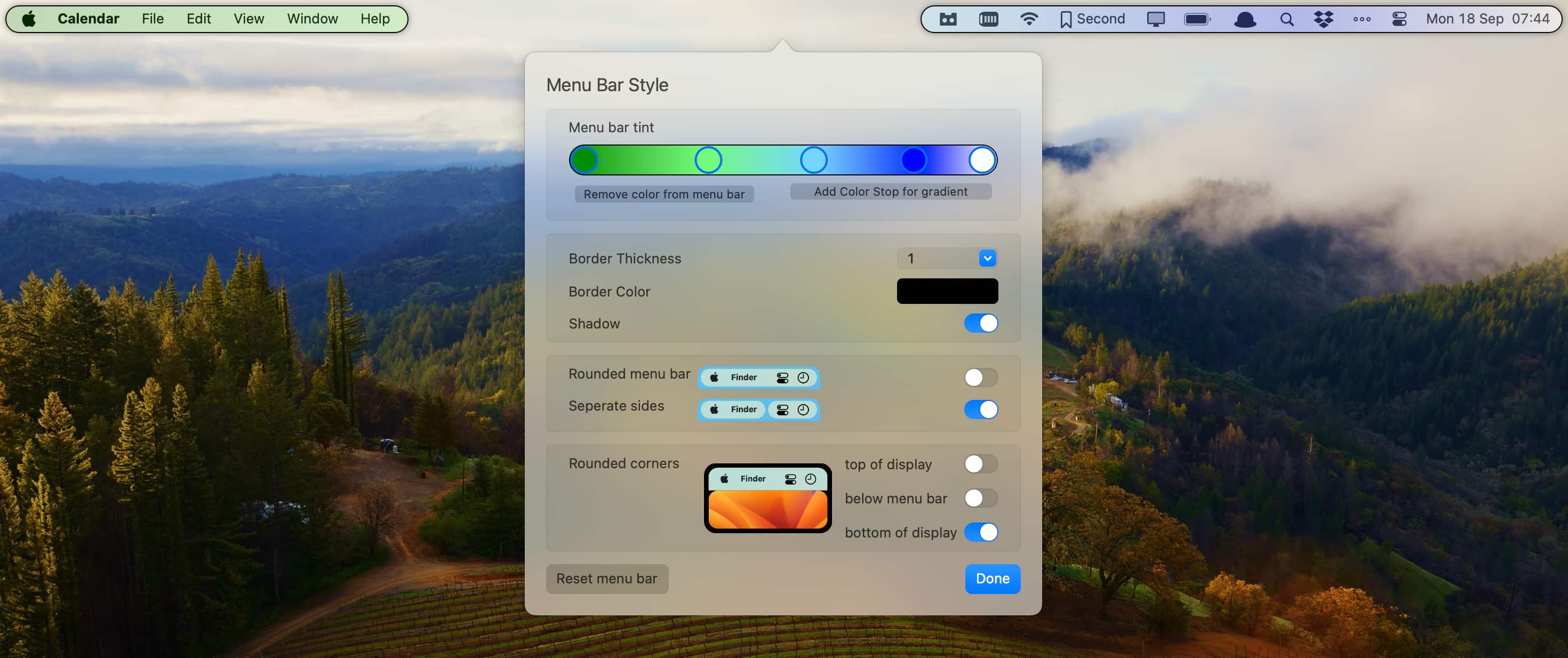

Make your menu bar your own, with menu bar styling you can:

Combine multiple menu bar items into one customisable menu bar item, and have quick access to all the menu bar items within.
For example group all your cloud drive apps together like Dropbox, OneDrive, Google Drive.
Have a group for connection related items such as Wi-Fi and VPN.
And another for media related items, like volume, media controls, airplay.
This can be a great way to have access to all your menu bar items on a MacBook Pro or Air with limited menu bar space due to the screen notch.
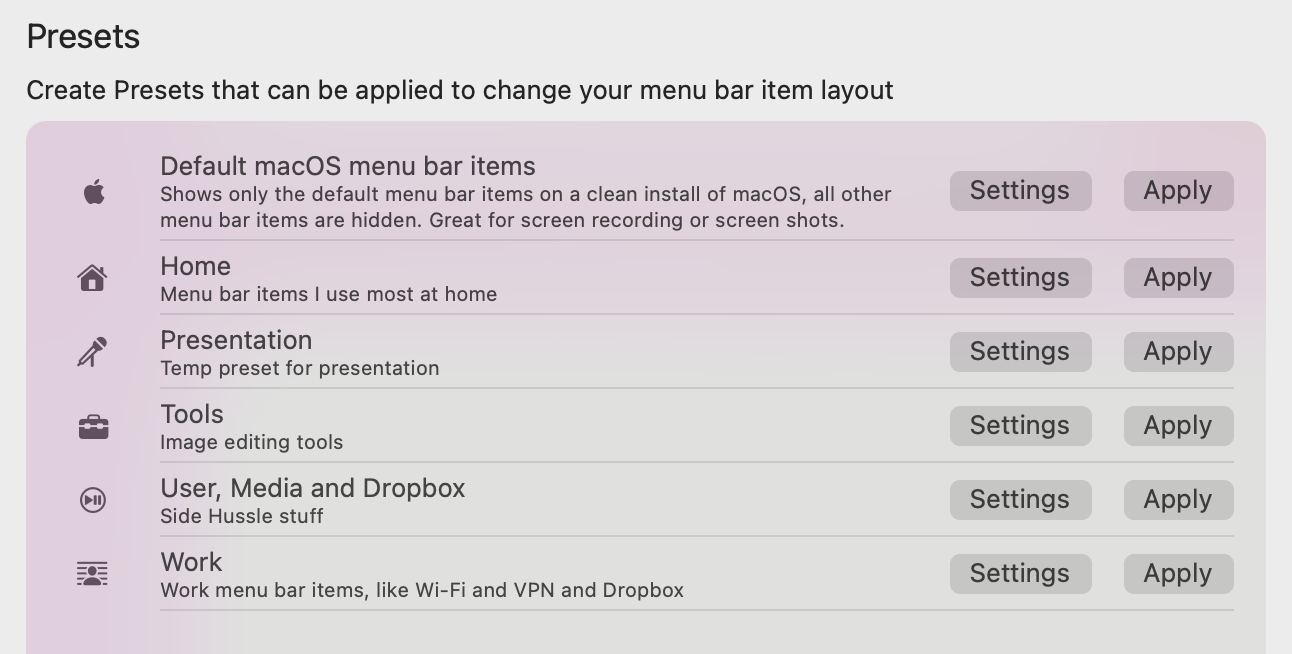
Create as many presets as you want and always have the right menu bar items available for your current workflow.
Show the macOS default menu bar items when recording your screen or screen sharing
Show work specific menu bar items in work hours, then social media items when at home... the possibilities are endless.
Presets can be automatically applied via triggers and also by macOS Focus modes.
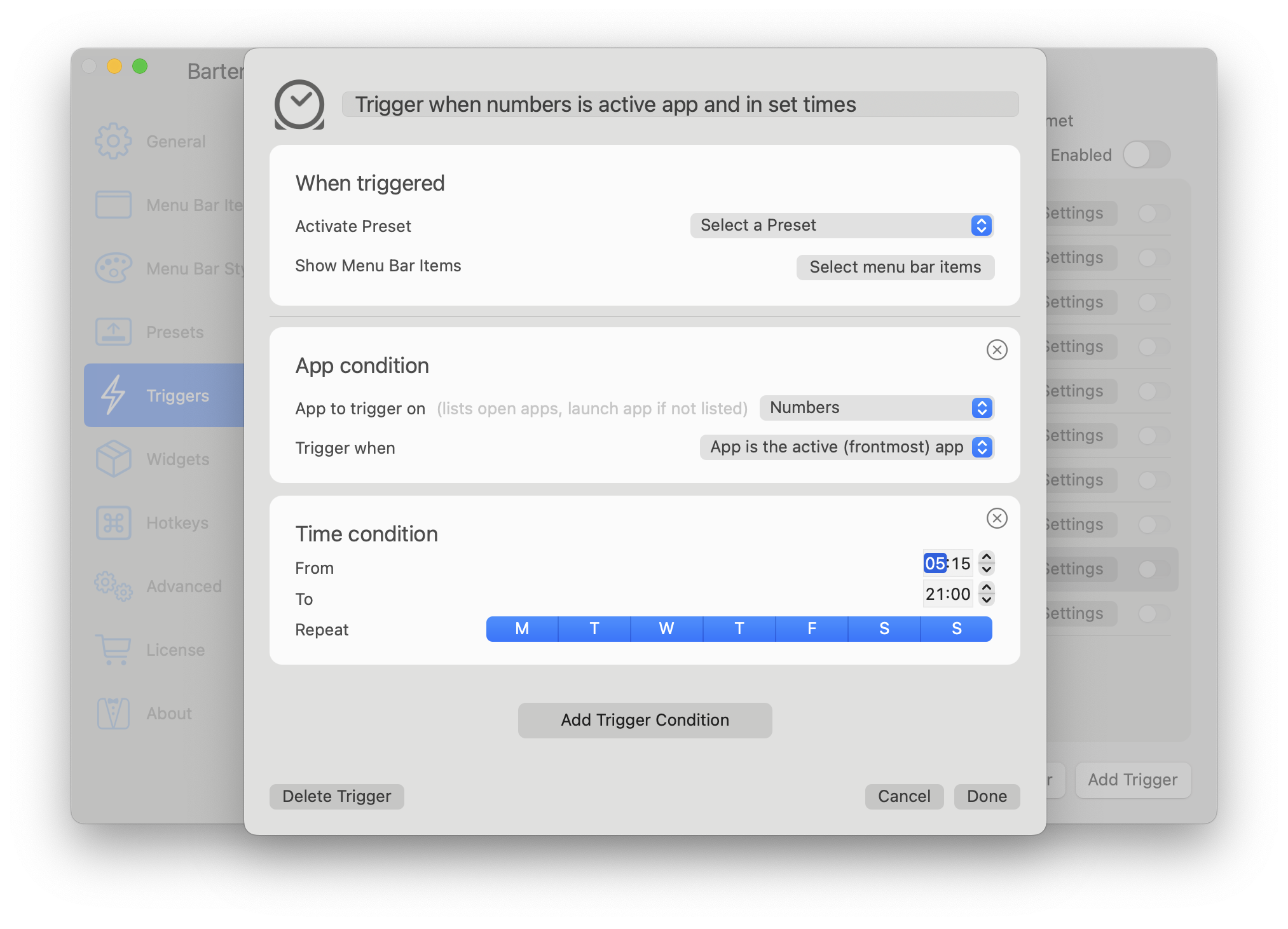
With a completely new Trigger system
you can apply a preset automatically, or show a set of menu bar items whenever your trigger conditions are met. Triggers conditions currently include
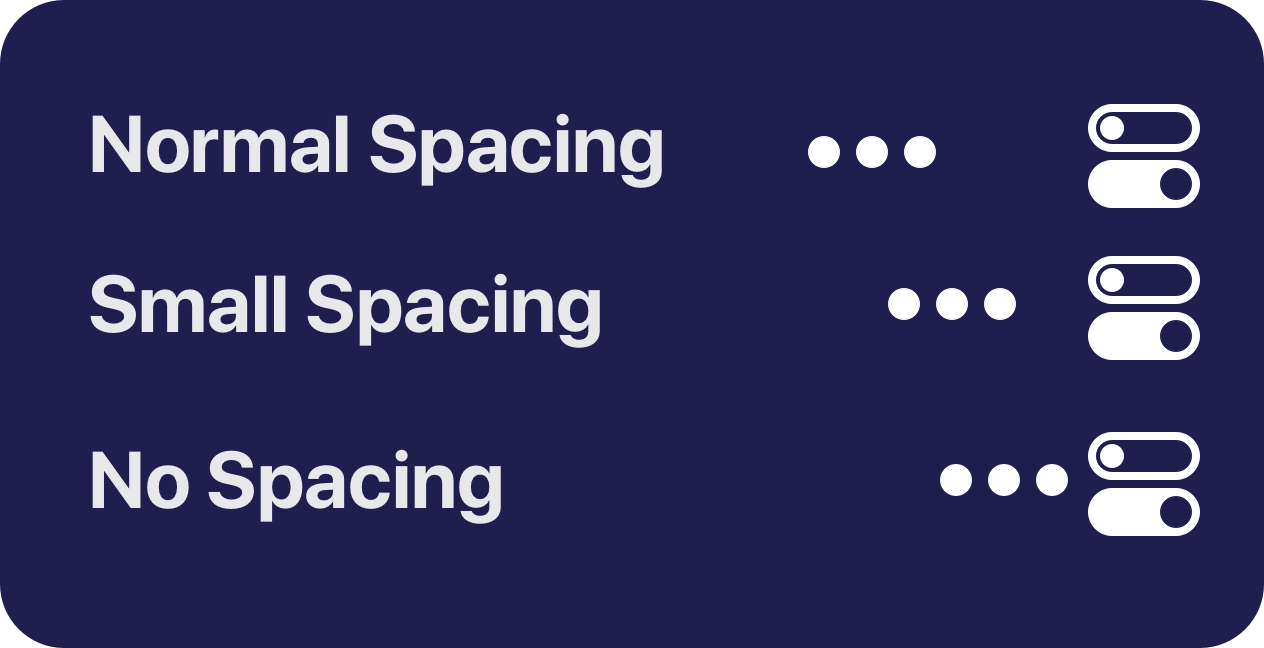
Reduce the space between menu bar items using Bartender, allowing you to have more menu items onscreen before reaching the macbook notch. Or just purely for style.
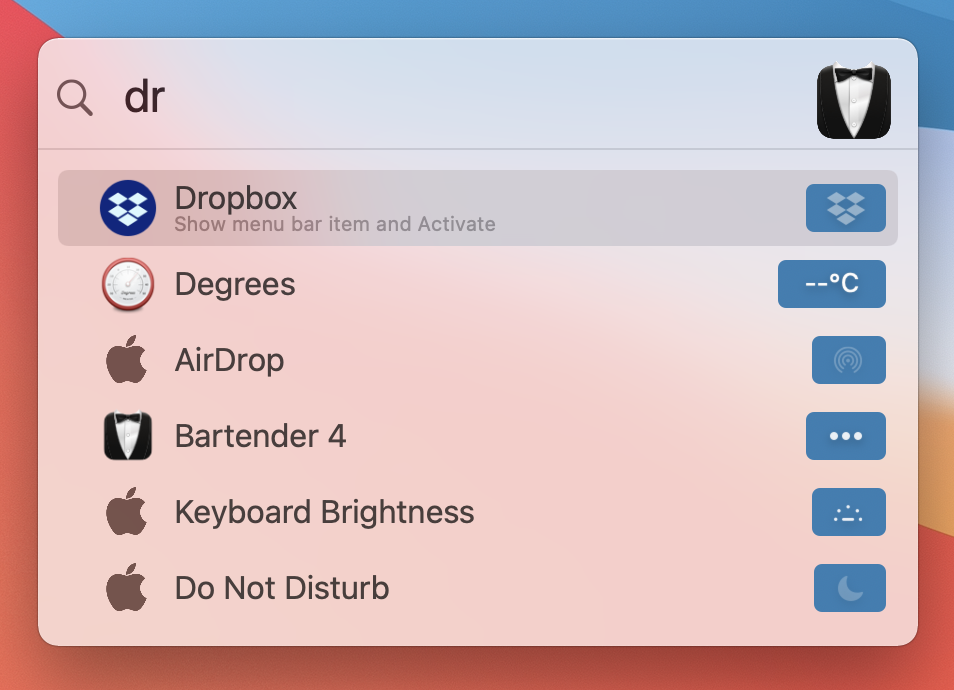
Quick Search will change the way you use your menu bar apps.
Instantly find, show, and activate menu bar items, all from your keyboard.
* the macOS screen capture menu bar item can show when using this. more info
Bartender 5 is designed for all the great changes in macOS Sonoma.
Bartender 5 runs native and lightning-fast on Apple Silicon and Intel macs.
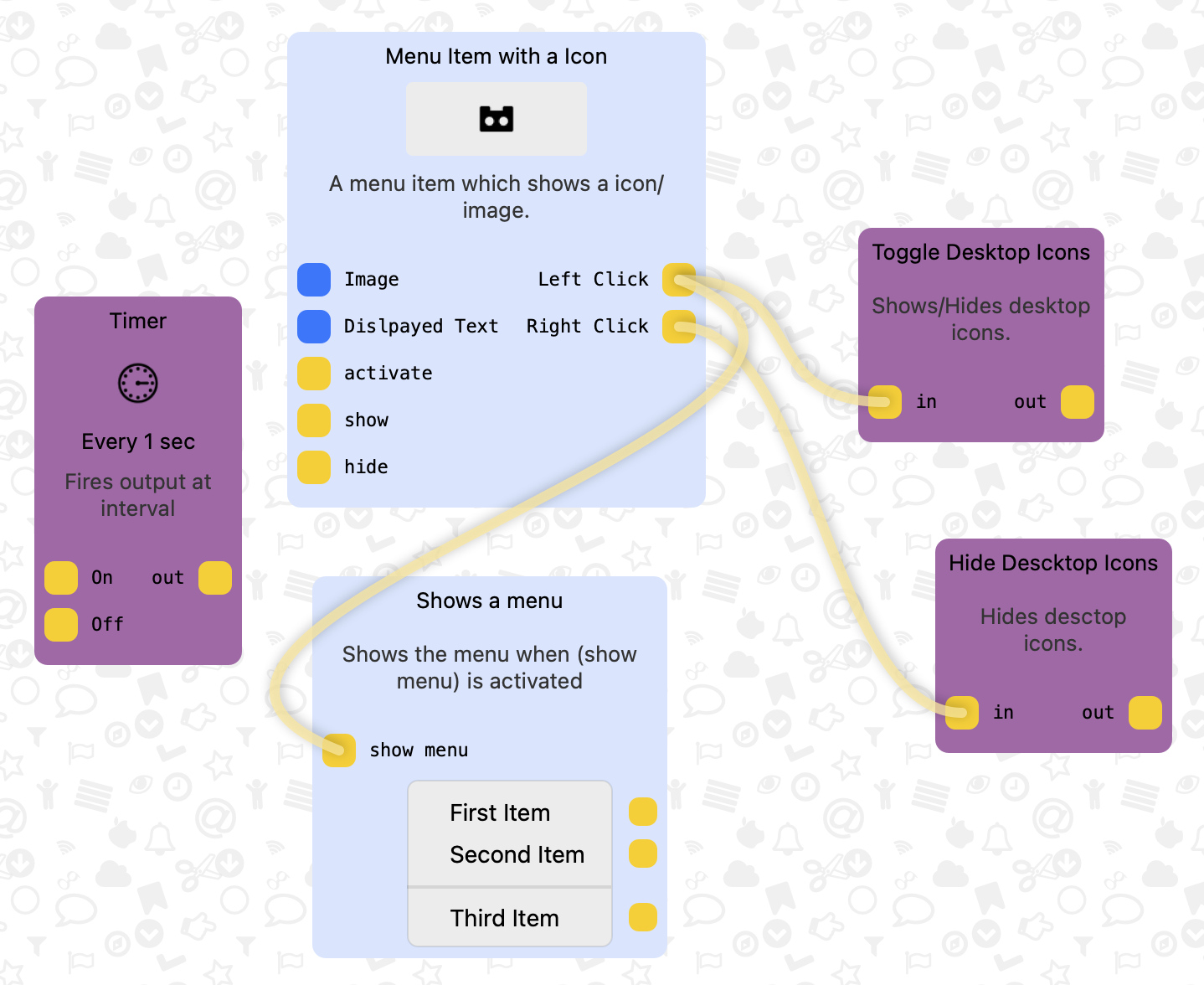
Create your own menu bar items
With Bartender widgets you can create your very own custom menu bar items, that trigger pretty much any action you want, no coding required.
Add hotkeys for any menu bar item; this can show and activate any menu bar item via any hotkey you assign.
With Spacers, your menu bar is uniquely your own, with the ability to customize menu item grouping and display labels or emojis to personalize your menu bar.
Use Apple Script to show and activate menu bar items. Fantastic for some advanced workflows.
Swap shown items for your hidden ones to take up less menu bar space, allowing you to have more menu bar items on a smaller screen.
You can choose where new menu items will appear in your menu bar, shown for instant access, or hidden for less distraction.
Released in the late 2000s, the collaborative track Ca la Amsterdam by the influential Romanian music producer Costi Ioniță and singer Alberto stands as a fascinating case study in the evolution of modern Balkan pop-folk. Costi Ioniță, who would later gain international recognition and earn a Grammy nomination, was a pioneering force in shaping the landscape of Romanian manele and commercial dance music. In this track, the artists craft a vibrant, energetic soundscape that encapsulates the cross-cultural pollination defining post-communist Eastern European pop culture.
Lyrically and visually, the song utilizes Amsterdam as a potent symbol of ultimate freedom, Western hedonism, and progressive lifestyles. For the Romanian audience of that era, referencing major Western European capitals served as an aspirational metaphor for breaking away from traditional social constraints. The chorus and instrumentation fuse traditional Balkan rhythmic sensibilities with contemporary electronic beats, a signature production style that Ioniță masterfully popularized throughout the region. Released in the late 2000s, the collaborative track
Ultimately, Ca la Amsterdam is more than just a catchy club track; it reflects a specific moment in Romanian cultural history. It demonstrates how artists of the time leveraged Western European imagery to redefine local music genres, making them palatable to a younger, more globally connected audience. Through this collaboration, Costi and Alberto successfully captured the optimistic, boundary-pushing spirit of a generation looking toward a broader European identity. Lyrically and visually, the song utilizes Amsterdam as
The music video acts as a visual extension of this thematic escapism. It employs stylized party aesthetics, dynamic lighting, and choreographed sequences to project an image of modern, cosmopolitan luxury. Rather than presenting a literal depiction of the Dutch capital, the video constructs a glossy, idealized fantasy of nightlife that bridged the gap between local musical traditions and global pop standards. Ultimately, Ca la Amsterdam is more than just